Biocracked
←

#animal study

1 article
Approach: macro science (with a conceptual split). Palette: D, bold color field.

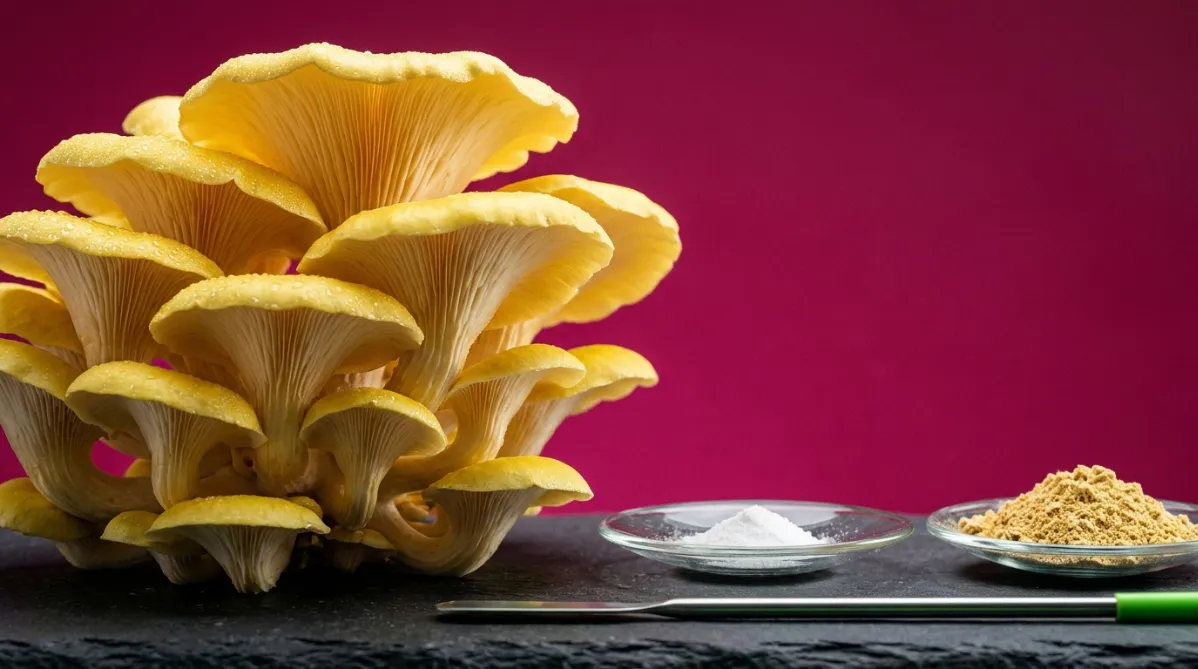
Extreme close-up photograph of a cluster of golden oyster mushrooms (Tamogitake), their ruffled, canary-yellow caps and fine gill structures sharply detailed, shot at a slight low three-quarter angle against a saturated magenta backdrop. In the foreground, a small glass watch dish holds a pinch of fine white crystalline powder, the isolated compound, sitting plain and inert beside a heap of fawn-yellow dried mushroom powder in a second dish. Soft directional studio light from the upper left gives the caps a translucent glow and creates crisp, short shadows. Tiny dew-like droplets cling to the gills. A single thin electric green stem of a lab spatula glints at the edge of the frame. Mood: curious, vivid, quietly skeptical, with the mushroom clearly outshining the isolate. No text or labels.
research

این قارچ چربی کبد موش‌ها را کاهش داد؛ ترکیب اصلی‌اش این کار را نکرد

BY NOVA CHEN ·

ارگوثیونین ترکیبی است که معمولاً به‌عنوان دلیل سلامتی قارچ‌ها شناخته می‌شود، اما مطالعه‌ای جدید روی موش‌ها این روایت را پیچیده می‌کند. موش‌ها و رت‌های چاقی که پودر قارچ صدفی طلایی (تاموگی‌تاکه) دریافت کردند، کلسترول و تری‌گلیسید کمتری در کبدشان داشتند؛ در حالی که موش‌هایی که فقط ارگوثیونین خالص داده شد، چنین کاهشی مشاهده نشد. همچنین مصرف قارچ باعث افزایش دفع کلیستول و اسیدهای چرب آزاد در مدفوع شد، اما ایزوله‌اش این‌کار را نکرد. نویسندگان نتیجه می‌گیرند که این اثرات را نمی‌توان فقط به ارگوثیونین نسبت داد. تحقیق فقط روی موش‌ها انجام شده و میزان مصرف قارچ در رژیم آن‌ها حدود ۵٪ بود؛ پس نمی‌توانید به‌جای چک‑آپ کبدی‌تان یک استِر‑فری ساده کنید.

This page is available in